Oct 13, 2026 - By Team Relaio
AI Voice Agent vs IVR for Inbound Sales: A Practical Decision Guide
AI voice agent vs IVR: the short answer
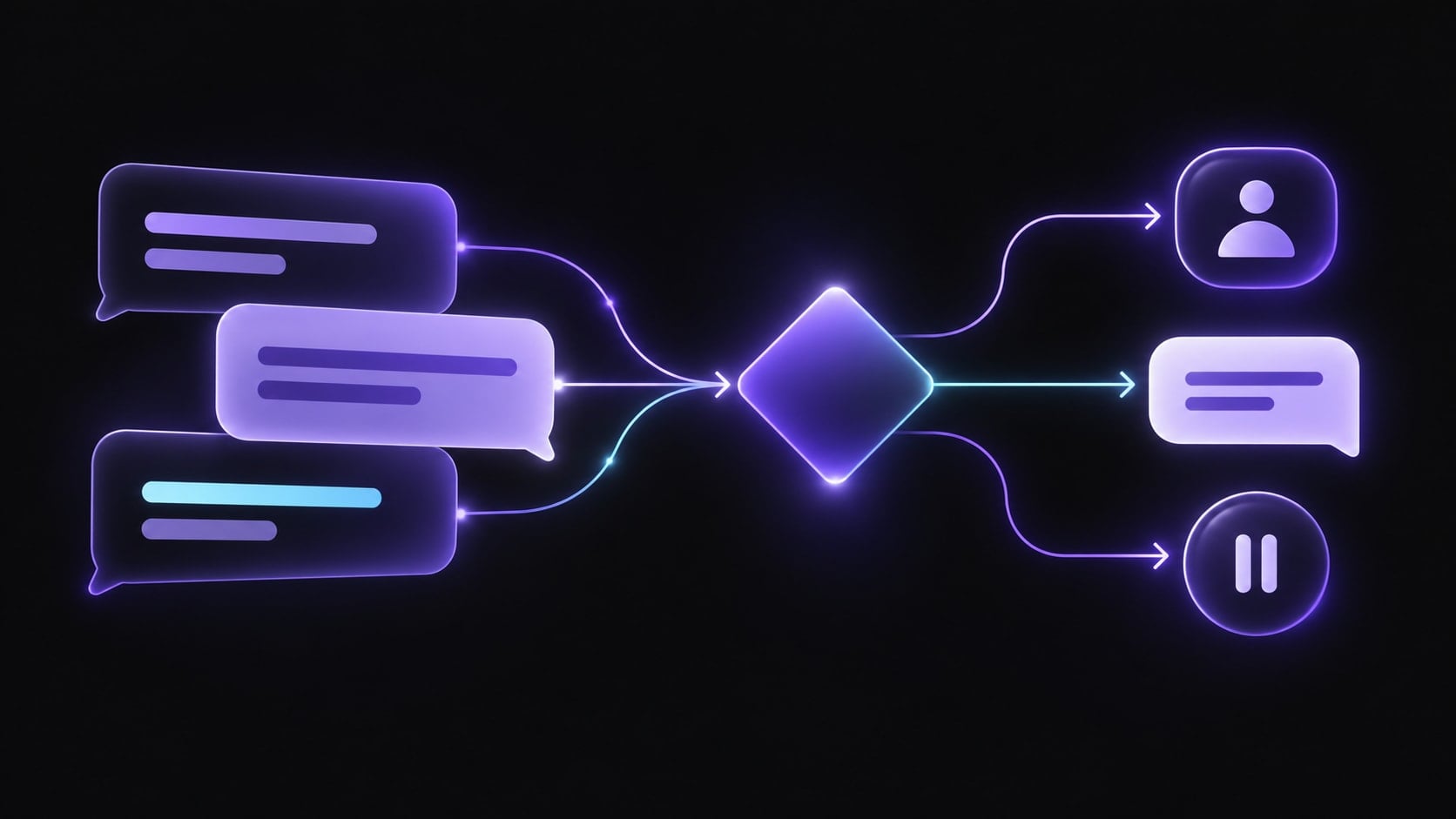
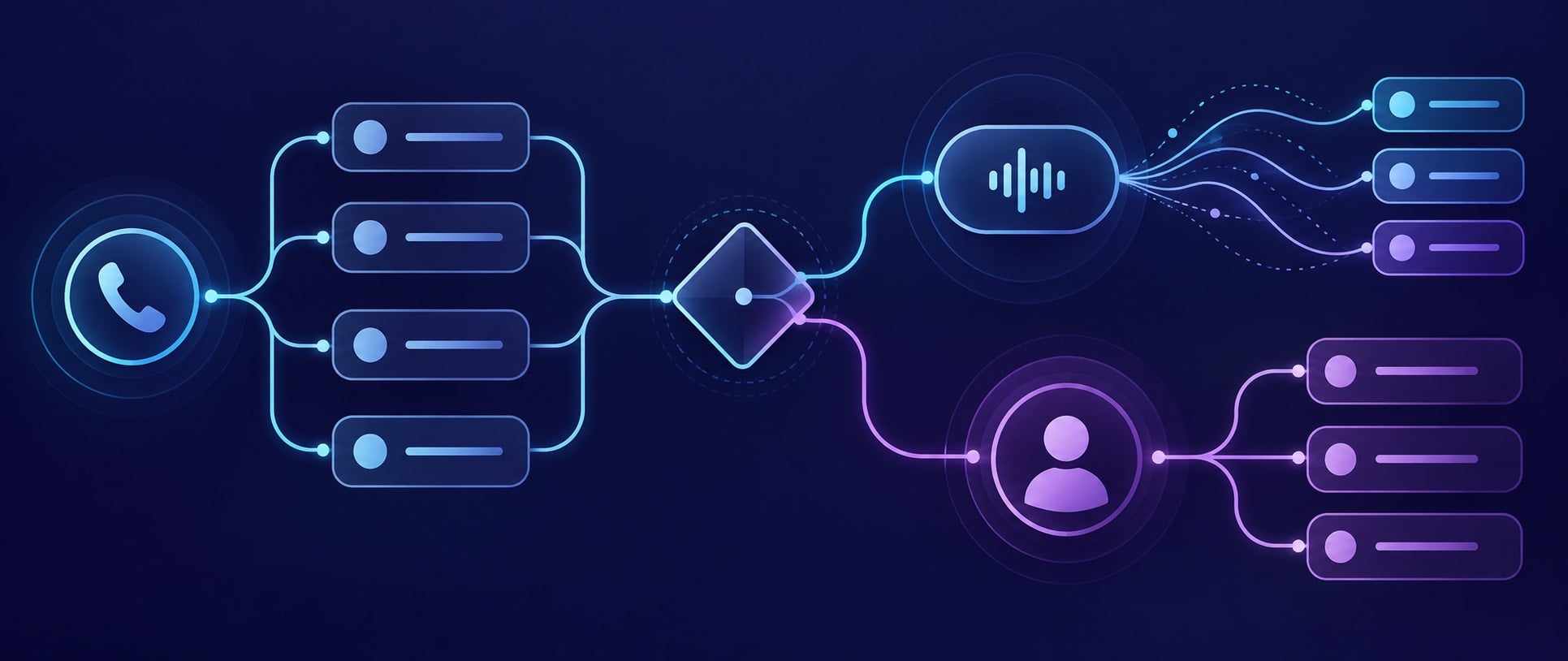
Use an IVR when callers can be routed safely through a small set of predictable choices. Consider conversational voice when callers describe varied needs in their own words and the business can define what the system may answer or collect. Use a hybrid when a menu is useful for controlled routing but some callers need a short conversation before the next step. Keep a human route available for exceptions, uncertainty, or a caller who asks for a person.
An IVR (interactive voice response) follows a defined menu or rule path. A conversational voice agent interprets spoken requests and may ask follow-up questions; what it can do depends on its configured capabilities and connected systems. Neither format is automatically the better choice for every inbound sales line.
Start with the calls, not the technology
Before comparing vendors, review representative inbound call reasons. For each one, record the caller’s goal, the minimum information needed to route it, the risk of a wrong answer, and who owns the next action.
Group calls into three types:
- Deterministic routing: The caller needs a known destination, such as sales, support, or an existing account team. A short IVR menu may be sufficient.
- Variable intake: The caller’s goal is not easy to express as one menu option. A conversational system may collect context, but only within an approved scope.
- Exception or judgment: The caller raises a complaint, asks for an unapproved commitment, cannot be understood, or requests a person. Define the human route before launch.
Do not automate a call type just because it is frequent. If the business cannot provide a reliable answer, routing rule, or accountable owner, first fix the operating process.
IVR, conversational voice, or hybrid?
| Call condition | IVR menu | Conversational voice | Hybrid |
|---|---|---|---|
| A few clear destinations | Often a good fit | May add unnecessary steps | Useful if only some options need dialogue |
| Caller language varies widely | Menu wording can constrain choices | Can capture open-ended intent if tested well | Menu can handle known routes; conversation can handle a defined subset |
| A wrong route has a high cost | Rules can keep routing explicit | Requires strong boundaries and an immediate fallback | Use controlled routes first, with human review for exceptions |
| Caller needs qualification | Can collect a few fixed selections | Can ask clarifying questions within scope | Use the menu to select a path, then gather limited context |
| The team cannot answer after transfer | The menu can explain available options | A conversation does not solve the ownership gap | Route to a callback or queue only if that process exists |
This is a design aid, not a feature guarantee. Actual performance depends on call quality, configuration, the allowed information and actions, and the destinations available in the phone system.
A practical hybrid design for inbound sales
- Keep the opening short. Identify the business and offer a small number of clear routes. Avoid a long menu that repeats the company’s service catalogue.
- Let callers state the reason when a fixed option is a poor fit. Ask one focused question, then confirm the interpreted need in plain language.
- Collect only routing context. For example, a team may need the product or service area, whether the person is a new or existing customer, and a preferred next step. Do not request sensitive details unless the approved process requires them.
- Choose an explicit outcome. Route to a named team, place the inquiry into a defined callback process, or transfer to a person. Do not imply a meeting or callback is confirmed until an owner accepts it.
- Define stop conditions. Unclear speech after a reasonable retry, a request for a human, a complaint, an urgent issue, an unsupported question, or a failed transfer should leave the automated path.
- Pass the context forward. The receiving person should know why the caller contacted the business, what was already asked, what the caller said, and what decision remains.
- Test the failure path. Test silence, interruption, an unexpected request, an incorrect interpretation, an unavailable destination, and a caller who changes their mind.
When IVR is still the better choice
Keep the menu when it provides a clear, predictable route with little caller effort; when a required choice must be explicit; when the call’s risk makes open-ended interpretation inappropriate; or when the business has not established an accountable destination for conversational intake. A well-maintained menu can be simpler to audit and easier to change than a broader conversational workflow.
Do not keep a confusing menu solely because it already exists. Review where callers abandon the route, repeat choices, or reach the wrong team, then fix the routing or wording before replacing the system.
Migration decision tree
- Can the caller choose the correct destination from a few clear options? Keep or simplify the IVR.
- Do callers regularly describe needs that do not fit those options? Test conversational intake on one bounded call type.
- Does the call need both a predictable route and a short clarification? Design a hybrid path.
- Can the system answer or act only from approved information? If not, restrict it to intake and routing.
- Is a human destination available, with an owner and a fallback when unavailable? If not, establish that process before launch.
- Can the team compare real test cases and reverse the change? If not, keep the current route while preparing a controlled pilot.
Relaio and capability boundaries
Relaio’s public positioning describes sales conversations across voice and other channels. It does not, by itself, verify a particular IVR replacement, phone-number coverage, telephony provider, transfer behavior, CRM write scope, language, or inbound-call configuration. Confirm those requirements for the intended market and workflow before selecting a product design. For a broader readiness checklist, see how to assess an AI voice-agent pilot; for task ownership trade-offs, see AI voice agents vs human agents.
For a sales workflow discussion, contact Relaio. Until a global Voice solution page is live, use the Relaio homepage as the commercial overview.